Many Megapixels
One burning question I wanted to answer when I upgraded from a Sony Alpha 77II DLSR to a Sony Alpha 7RV was: Can I travel without my bulky Tamron 150-600 mm F/5-6.3 telephoto lens and still get decent pictures of wildlife? The idea was to take advantage of the full-frame sensor and effective 61-megapixel resolution of the Alpha 7RV and crop photos to make it look like I was as close to a subject as if I’d shot at 600 mm on the Alpha 77II. The telephoto lens I chose for the Alpha 7RV is the Sony 70-200mm f/4.0 macro G OSS II lens. While not as good as the Sony 70-200mm f/2.8 GM OSS II lens, I went with the macro variant because it fits my chest rig when attached to the Alpha 7RV body.
When I brought the new camera home, I did some experimenting and pixel-peeping to do a comparison. But I didn’t do the ultimate test: Take one photo with the Alpha 7RV/Sony 70-200 mm macro G lens and one with the Alpha 77II/ Tamron 150-600 mm lens and compare them. With the two cameras slung around my neck, I headed out to the backyard. Birds at the feeder seemed as good subjects as anything. I wanted to see the results with the same three properties for both cameras. I used f/8 for the F-stop. I set the ISO to 200. After checking exposure, I settled on 1/200 sec. Positioned about 10 m from the feeders, I snapped a few photos with each camera and then hurried back inside to compare the results.
Here is the unedited photo from each of the two cameras, Alpha 77II on left, Alpha 7RV on right.
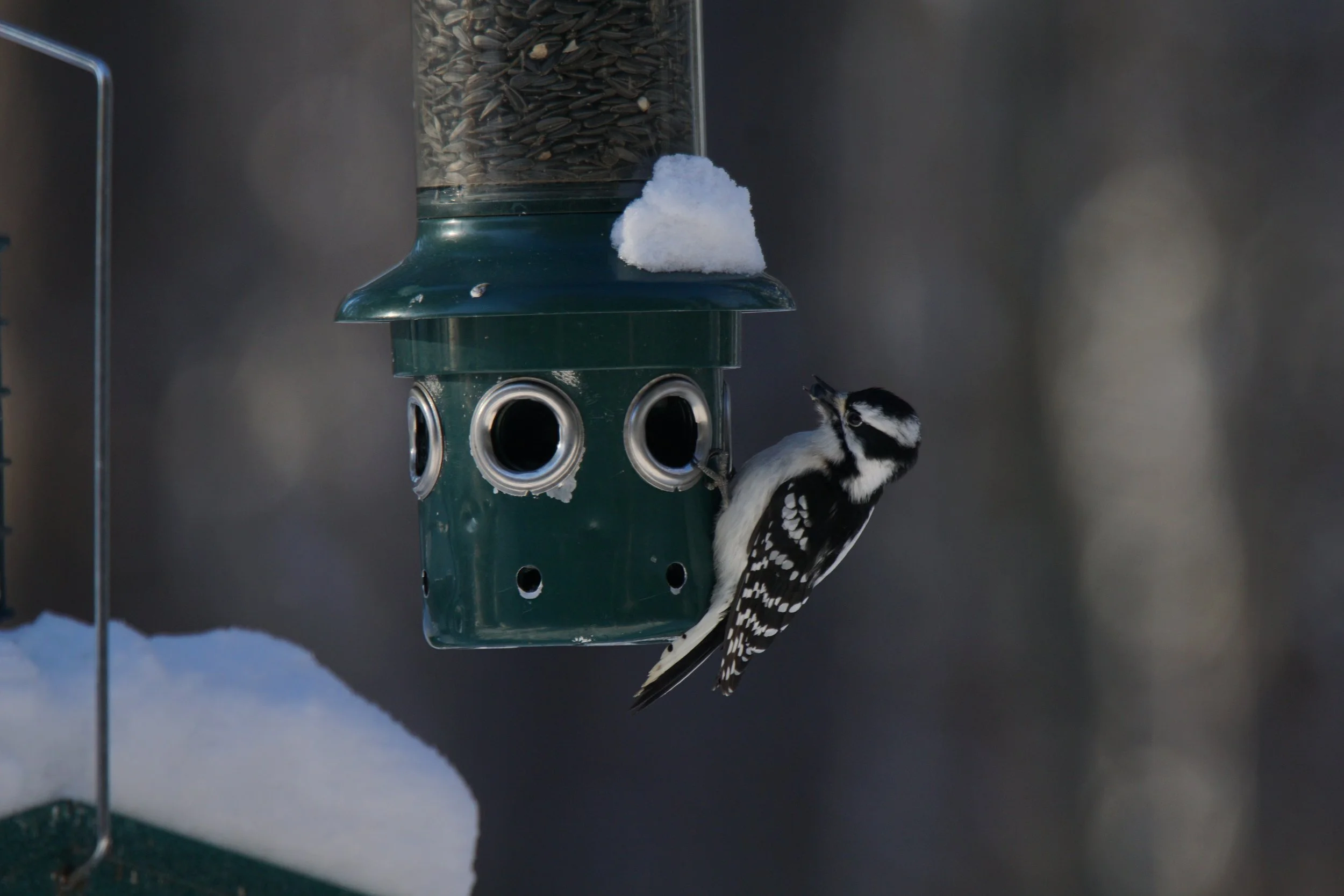
Sony Alpha 77II with Tamron 150-600mm lens
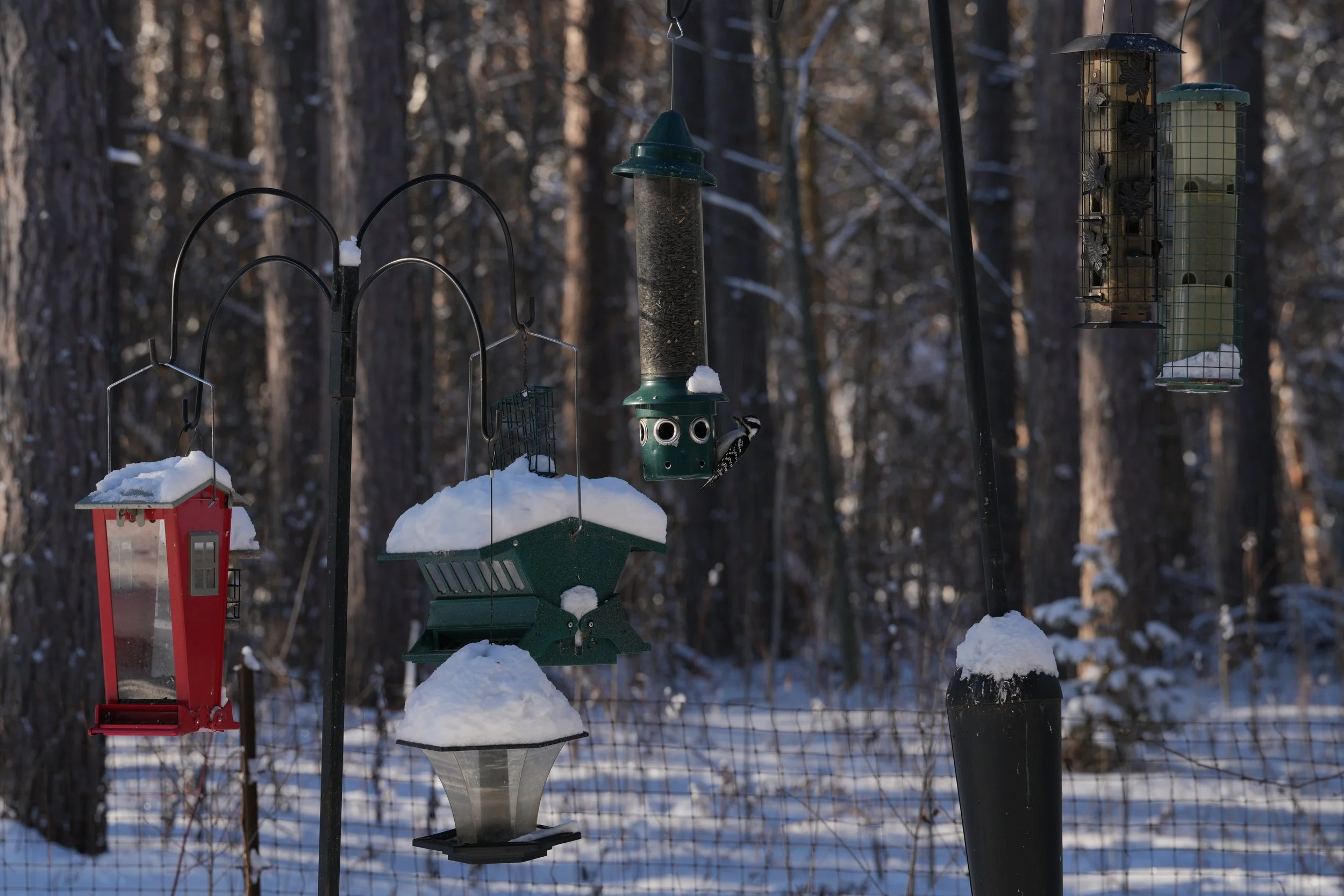
Sony Alpha 7RV with Sony 70-200mm macro lens
Here are two cropped photos for the two cameras, keeping the two birds roughly the same size in each. I applied auto levels, auto colors, and auto white-balance in Affinity Photo 2 to each cropped photo. Lastly, I applied the sharpen/clarity filter at 75% strength to each to see if I could enhance the details of the feathers.
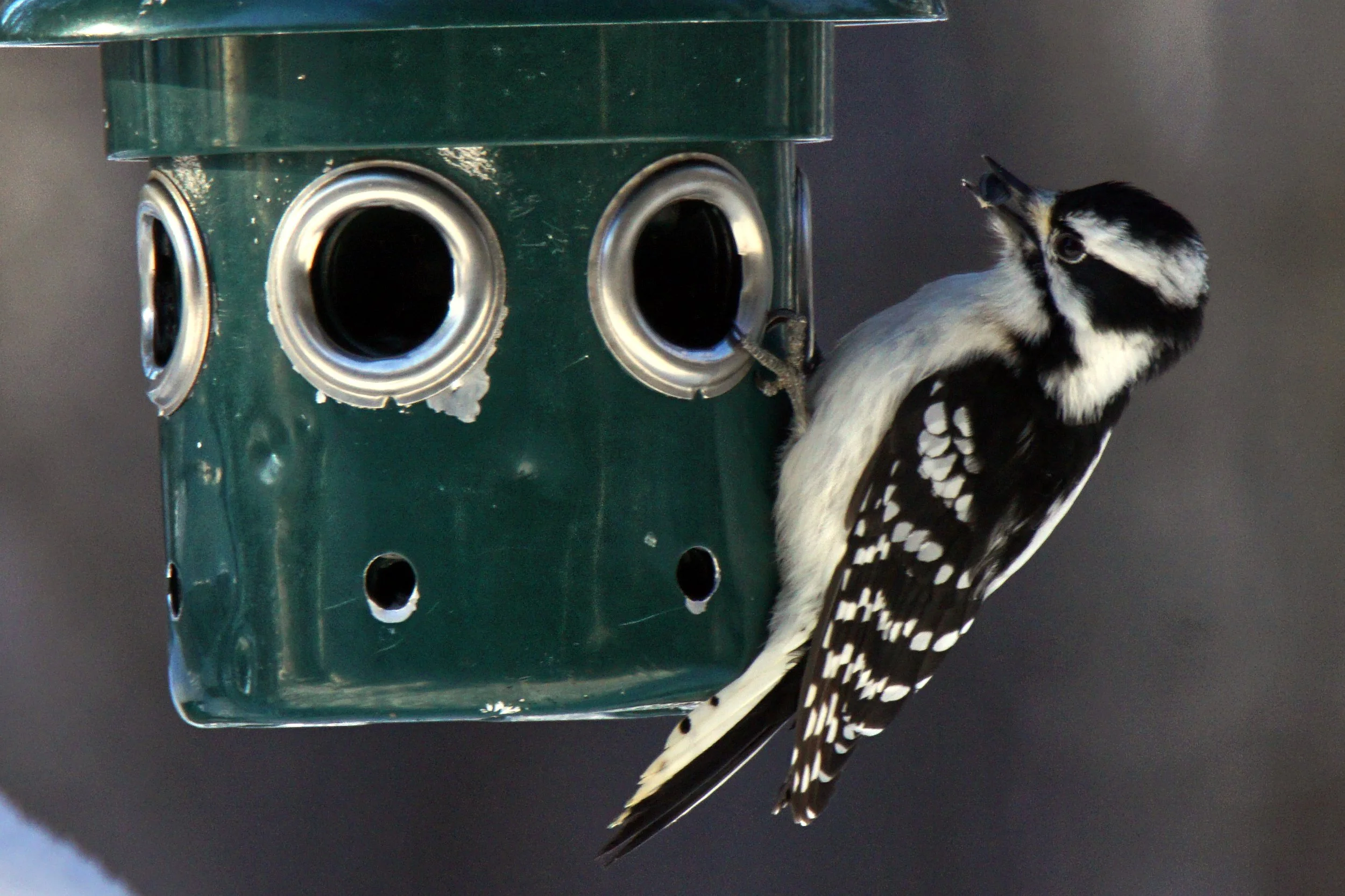
A77II photo above, cropped and adjusted
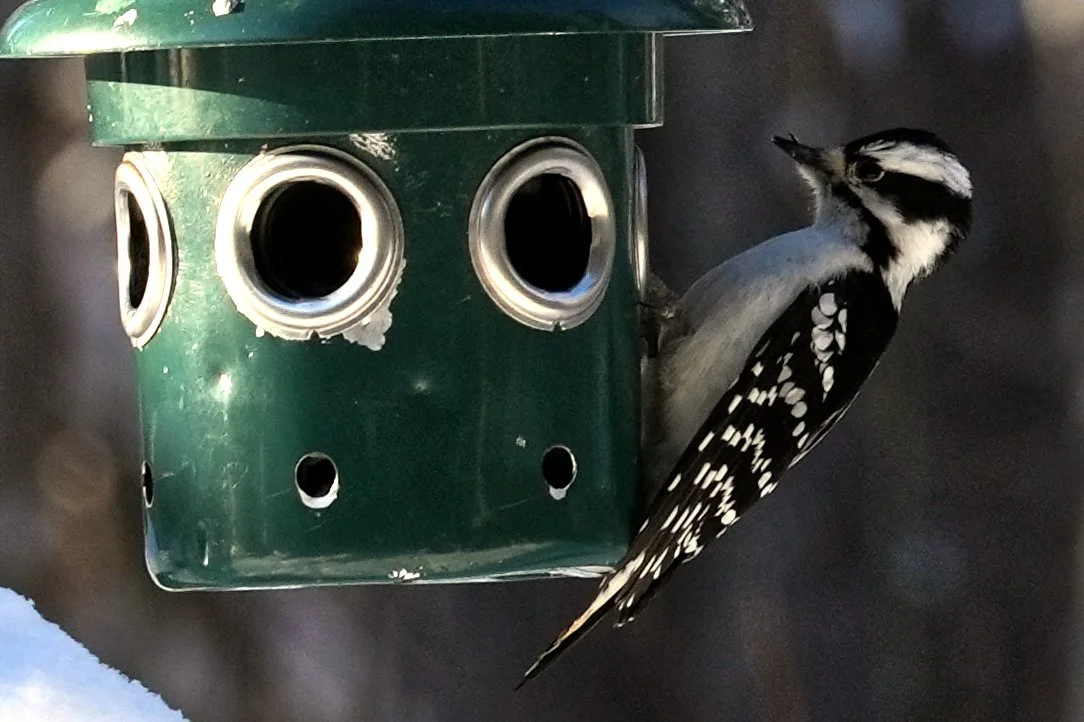
A7RV photo above, cropped and adjusted
I was surprised by the results. Looking at the photos on my computer monitor, the image from the Alpha 77II looked better than the image from the Alpha 7RV.
But I don’t shoot at f/8 very often. My preferred mode is aperture priority: I like to control the depth of field. For wildlife, I’d use the smallest f-stop possible. Setting ISO back to auto and switching over to aperture priority, I went back outside. Here are two photos from each camera: unedited, cropped and filtered for clarity.
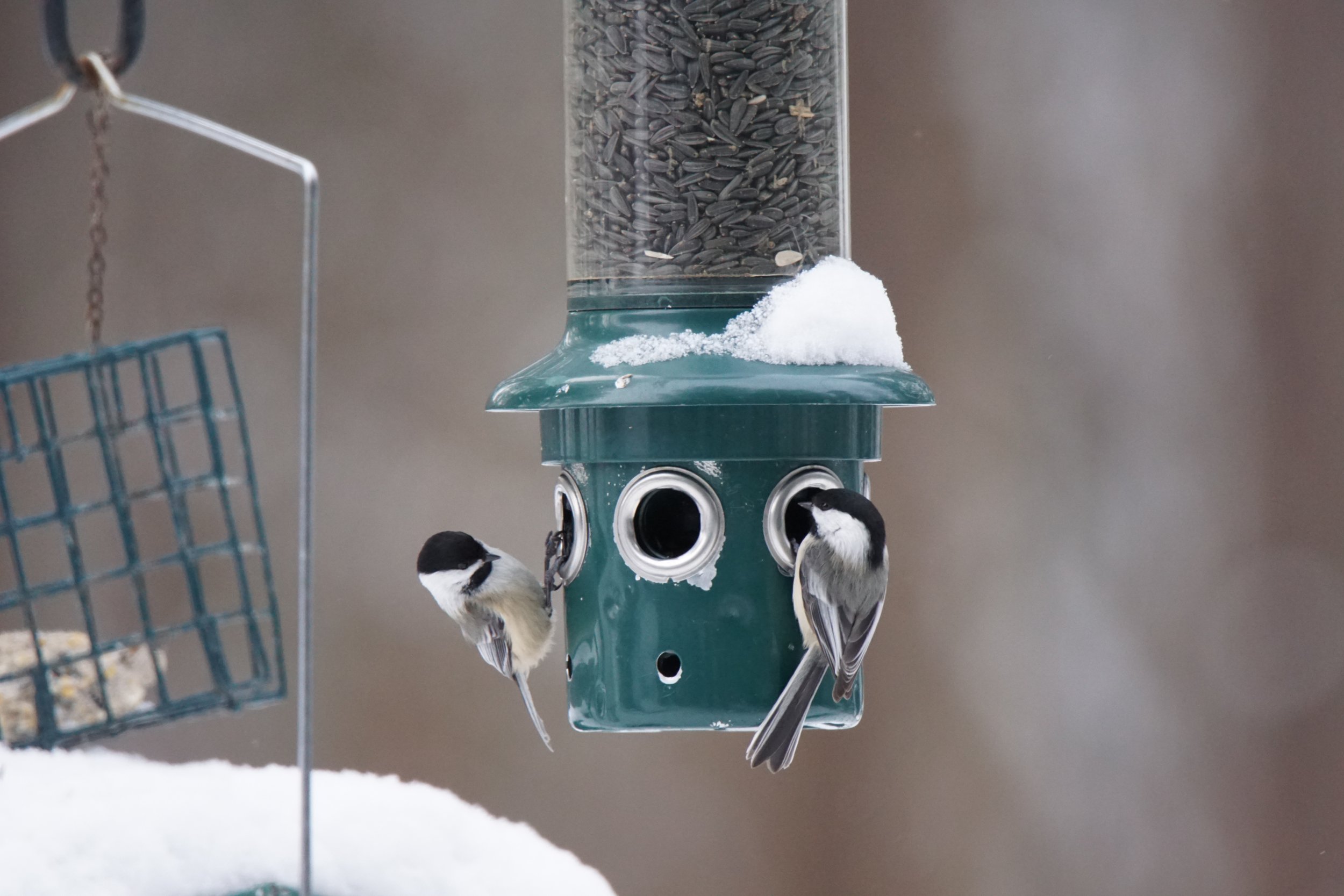
Sony Alpha 77II with Tamron 150-600mm lens
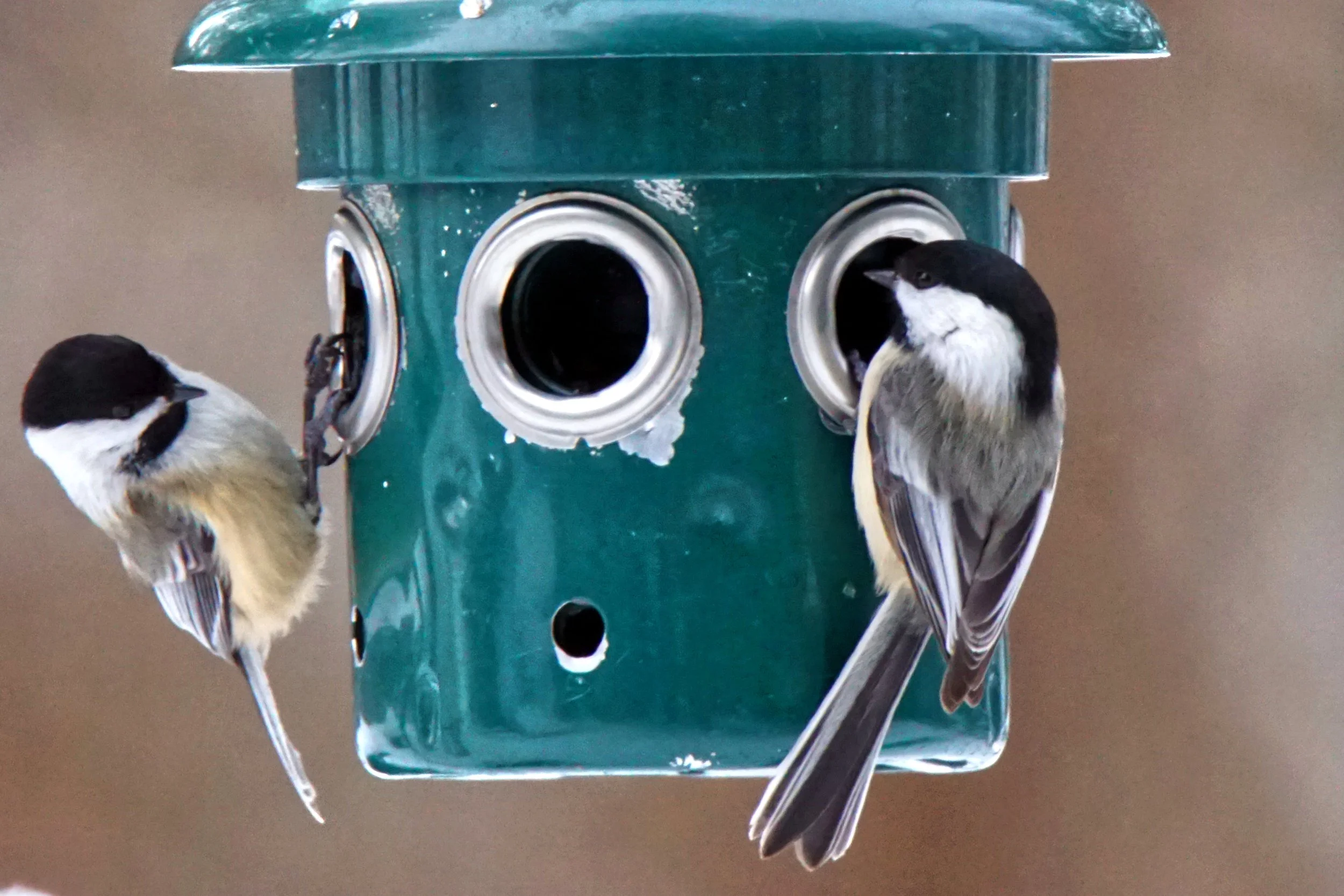
Cropped A77II photo auto-adjusted and sharpened
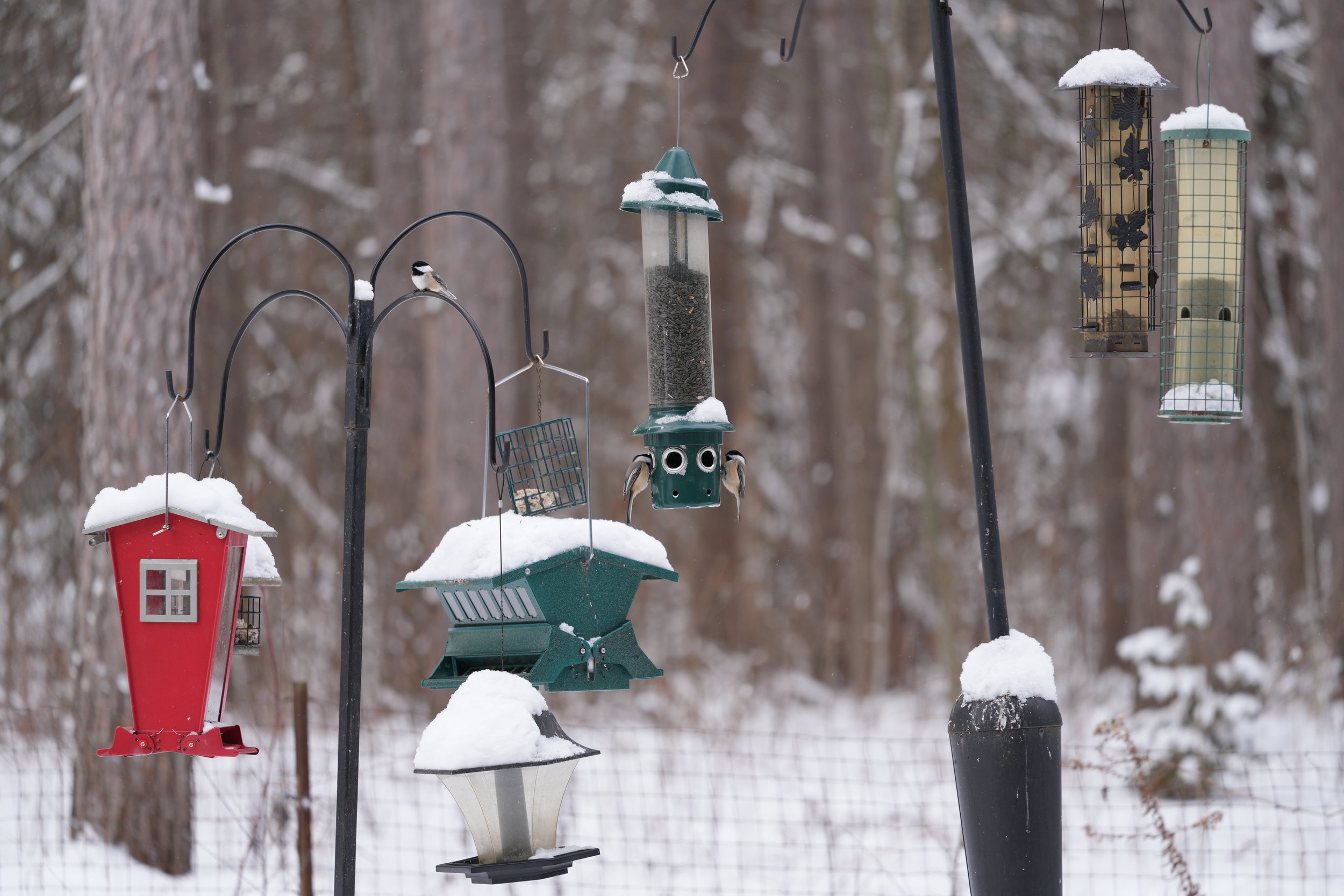
Sony Alpha 7RV with Sony 70-200mm macro lens
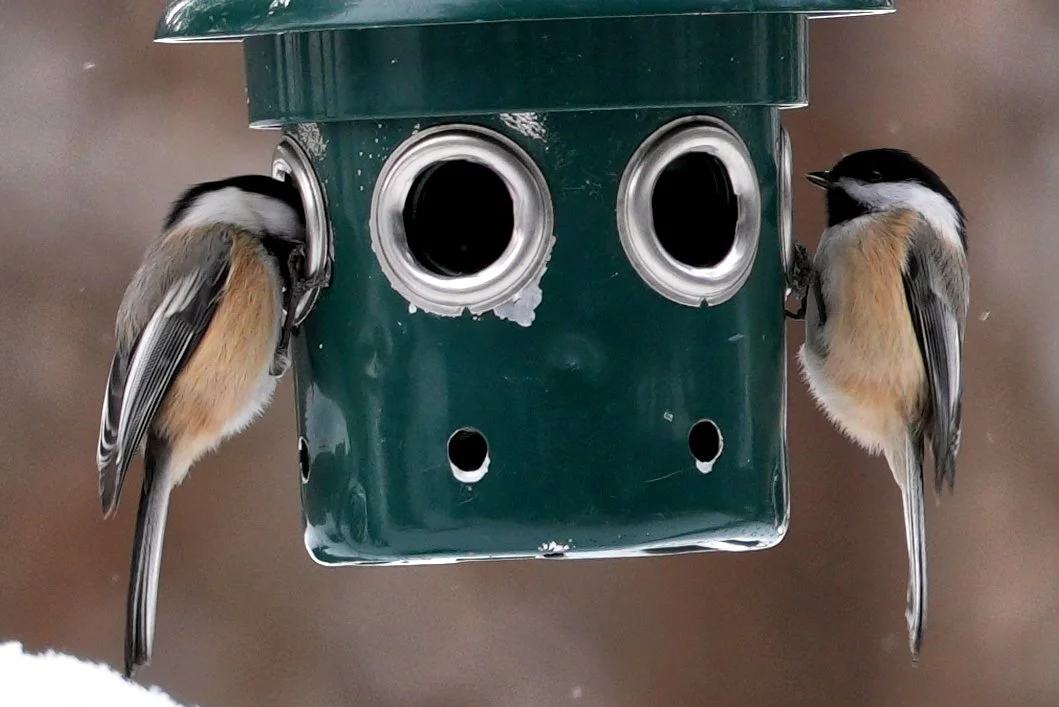
Cropped A7RV photo auto-adjusted and sharpened
Here are the camera settings for the photos.
Sony Alpha 77II
F-stop: f/6.3
Exposure time: 1/500 sec.
ISO speed: ISO-1600
Sony Alpha 7RV
F-stop: f/4
Exposure time: 1/250 sec.
ISO speed: ISO-200
Pixel peeping didn’t show a clear winner between the two. I suspected from photos taken on a trip to the Galapagos Islands that the Sony A7RV with the 70-200mm lens gave me good reach on distant subjects. The results of this test backed up my tacit conclusion.
When I bought the Sony Alpha 7RV I also purchased the A-mount to E-mount adapter. My thinking is that I would continue to use the Tamron 150-600mm lens with the new camera. I’ve never evaluated what I’d get for a photo with this lens on the A7RV. Back outside to the bird feeder with this combination and I had this photo for examination. As before, the unedited photo and a cropped version with auto levels, auto colors, auto white-balance, and 75% sharpen filter applied.
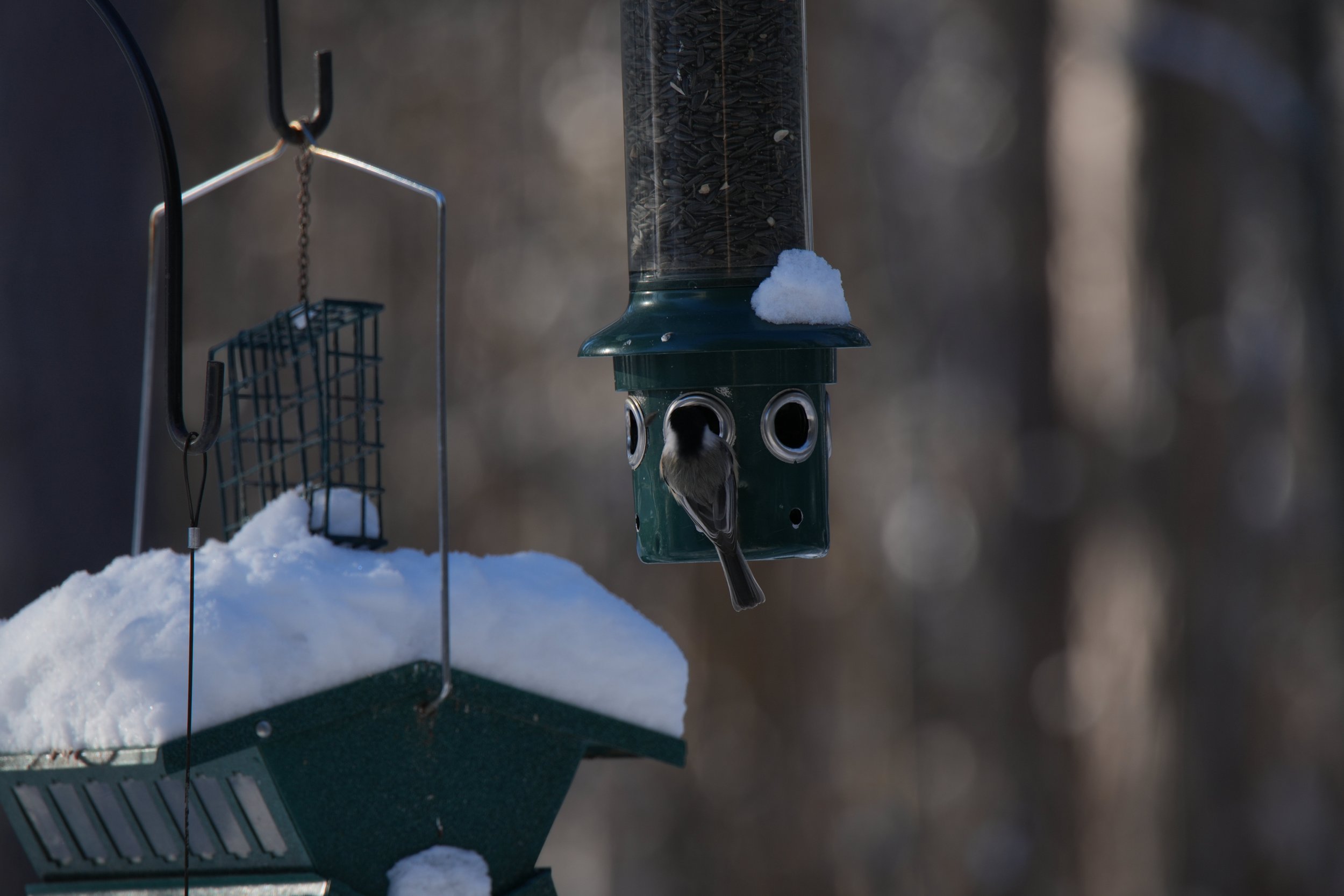
Sony Alpha 7RV with Tamron 75-200mm lens, 600mm focal length, f/8, 1/200 sec., ISO-200
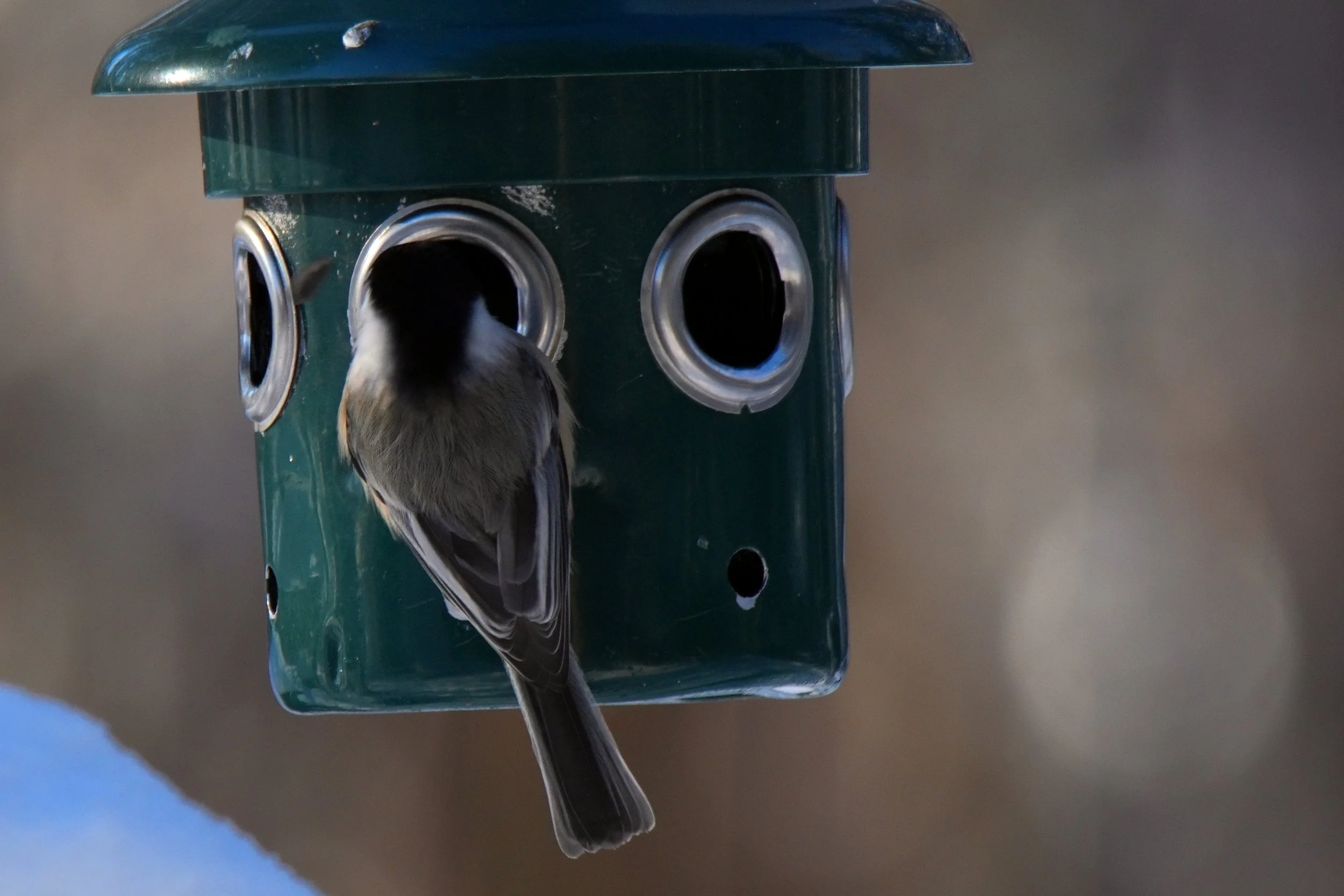
Image at left cropped and adjusted
Cropping in on the chickadee’s back, we can still see detail in the feathers.
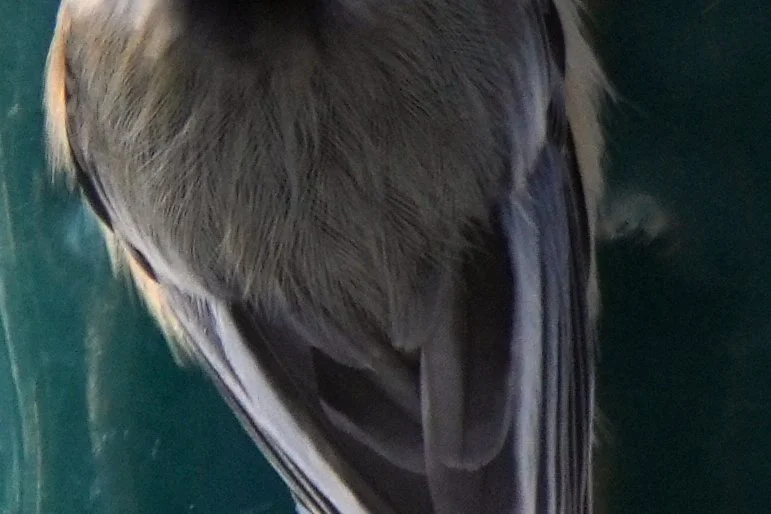
Cropped and adjusted image zoomed in further
Compare the photo above with a cropped version of the photo taken on the A7RV at f/4: the image is pixelating when zoomed in this far.
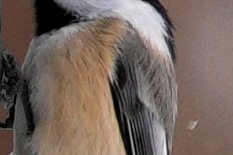
Zoomed in on the photo taken on the A7RV at f/4
My conclusion is that cropping in substantially with the super-telephoto lens gives me better results than I get cropping in a lot with the 70-200mm lens. But I only had a couple of photos from the Galapagos Islands trips where I couldn’t crop in as much as I’d have liked to in the edited photo. Not having to carry the bulky, heavy Tamron 150-600mm lens was worth more than the lost opportunity to zoom in super close on some of the wildlife I saw.
I got many great photos with the A7RV, taking advantage of the full-frame sensor and cropping in a lot. Here is one photo from my Galapagos Islands trip, the version after cropping and adjusting.
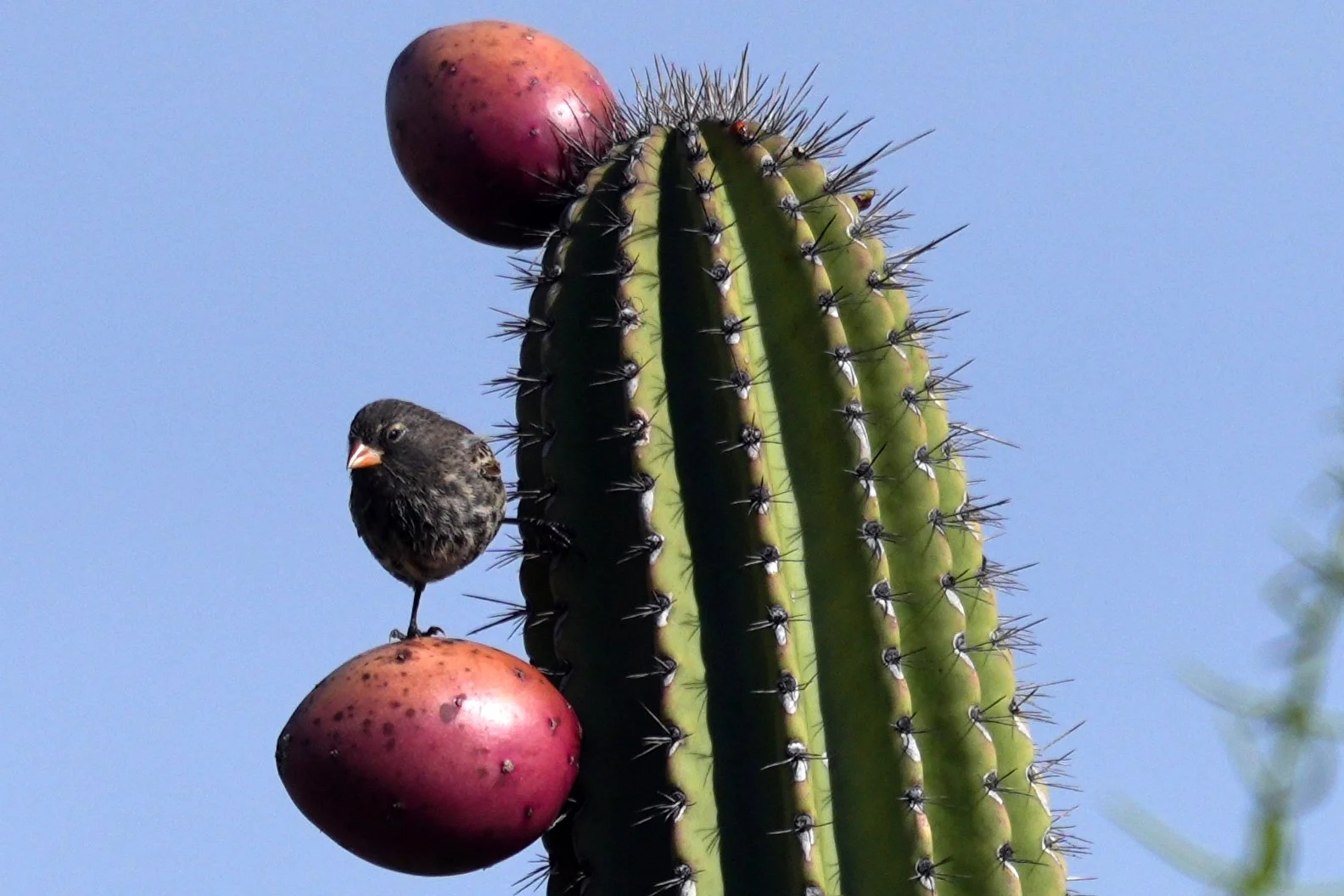
Final image I wanted for the photo book of our adventure
Here’s what I started from, as recorded by the camera.
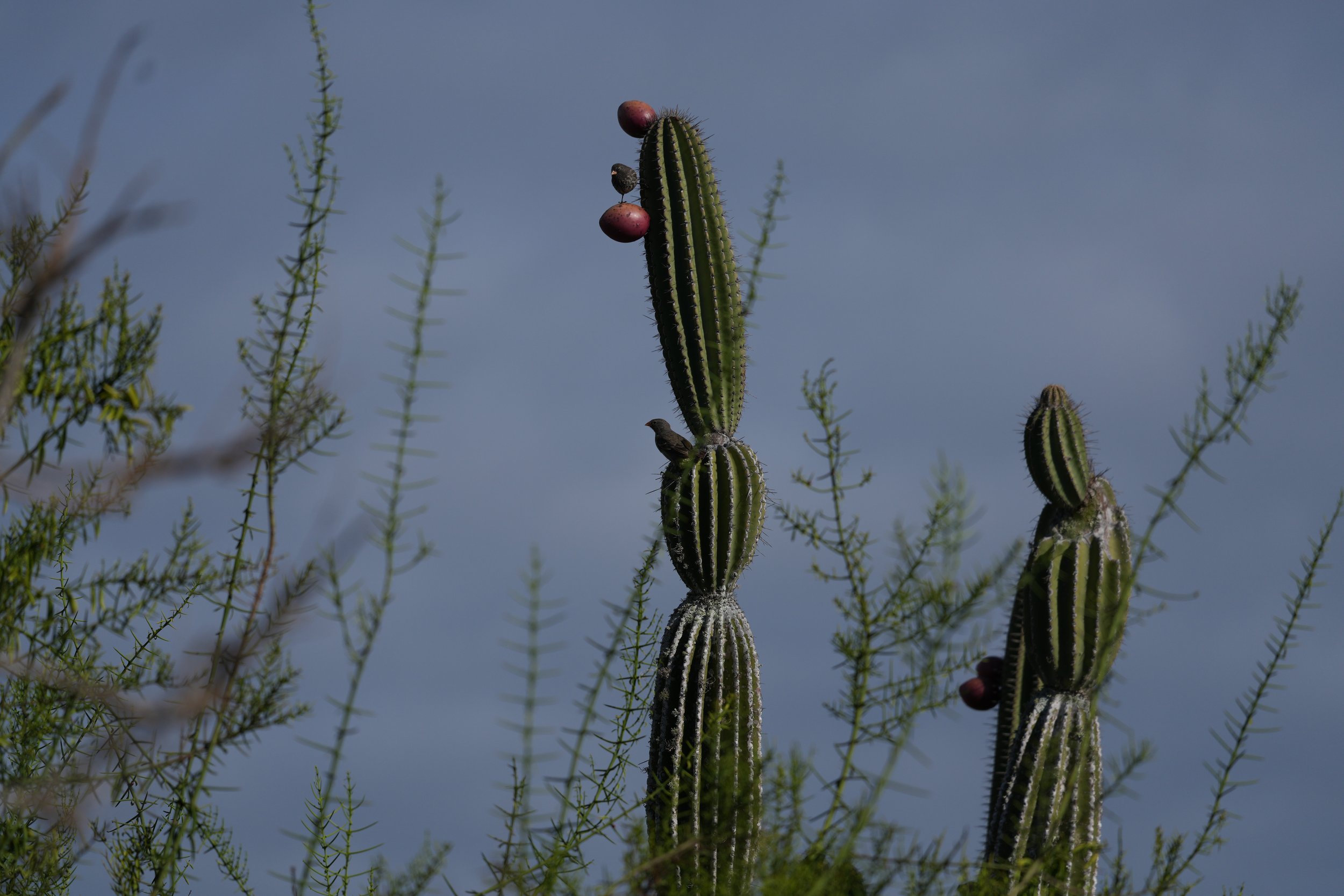
Sony Alpha 7RV with 70-200mm macro G OSS II lens, F/4, 1/3200 sec., ISO-100, 200mm focal length.
My conclusion is that the Sony Alpha 7RV and Sony 70-200mm f/4.0 macro G OSS II lens is a more than adequate substitute for the Sony Alpha 77II DLSR and Tamron 150-600 mm F/5-6.3 telephoto lens. I don’t know if I’ll ever travel with the A-mount-to-E-mount adapter and Tamron lens in the future. If I ever want a super-telephoto for a trip, I might consider buying an E-mount lens, possibly a fixed focal length to minimize weight.